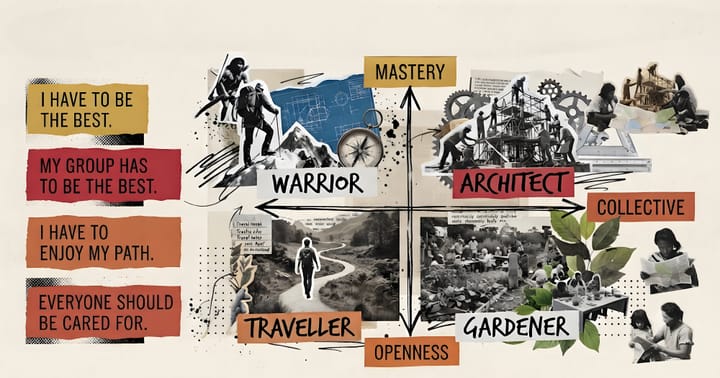
The Five Primary Values Archetypes Four sentences, and you will know which one you are. "I have to be the best." "My group has to be the best." "I have to enjoy my path." "Everyone should be cared for." And the fifth one, "I want to
A Low Mediator Score Is Not a Personality Every assessment eventually meets the result it was not designed to handle, and the honest ones say so out loud. A flat values profile is not a personality - it measures the absence of access to values: exhaustion, low mood, or a self long performed rather than inhabited.
The Charmer and the Fear Beneath the Gift Every family and office has one: the person who says the thing exactly the way the room wanted it said. The Charmer's room-reading gift is real competence - and behind it, in a striking number of cases, sits a fear of rejection doing the navigating.
The Visionary Needs Rails Organisations celebrate the Visionary in the keynote and starve them in budget season, and the pattern is a category error, not ingratitude.
The Mediator's Exhaustion There is a person in every group who seems to be from everywhere on the map at once - and the framework's notes about what that costs are the most brutal in the document.
The Parent and the Empty Nest The Parent - the framework's "emerging" archetype - builds so that others can be cared for, and pays for it in the most painful currency: absence. The provider whose family testifies they were never there is a structural outcome, not ingratitude.
The Executor Is the Villain's Right Hand The framework's notes make a quiet concession: the Executor is "usually the right hand of the villain in the movies". The movies are onto something - and also onto the other thing they keep showing, which is that the hero has one too.