The Visionary Needs Rails
Organisations celebrate the Visionary in the keynote and starve them in budget season, and the pattern is a category error, not ingratitude.
Organisations have a strange ritual with the Visionary archetype: they put it in the keynote and leave it out of the budget.
The Visionary - any orientation except Traveller, in the framework's architecture - is preoccupied with what could be: the one who sees emerging patterns before they have names, and, in the framework's own phrasing, equips for the future and is driven to bring it to reality. This is the archetype that spots the market shift in year one, names the cultural change in a paragraph, and describes the product that everyone will describe as obvious in five years. Companies celebrate this person in keynotes because hope, presented with evidence, is the most valuable substance a room can contain. Then the budget season arrives, and the pattern that funds what exists - not what could - quietly starves the Visionary a second consecutive year.
Why does this keep happening? Because the Visionary's core tool is hope, and hope is systematically mispriced. Most institutions treat hope as a mood - pleasant, cheap, renewable. The framework reads it as something closer to a working instrument, and psychology backs the reading. Rick Snyder's hope theory - built on decades of studies - defined hope not as optimism but as a cognitive process: goals, plus pathways to them, plus the agency to walk the pathways. Measured that way, hope predicts academic performance, athletic persistence and workplace outcomes in ways that mere optimism does not. The Visionary is not a person who feels hopeful. The Visionary is a person who operates hopefully - who runs the full Snyder machinery on futures that do not exist yet, as a day job.
Which is what makes hoping for a living harder than it sounds, and the archetype's costs more real than its myth admits. The Visionary holds a portfolio of futures, most of which will not happen, and must keep agency alive through the valley of being early - the loneliest station on any map, between "wrong" and "ahead of". Research on forecasting has found experts barely beat simple extrapolation on many questions, which means the Visionary's real skill is not prediction. It is the discipline of maintaining pathways toward a future the present keeps refusing to confirm.
The budget-season starvation, then, is not just ingratitude. It is a category error with a compounding cost: the institution that funds only the present is betting that the future will arrive without pathways - that someone else's Visionary, better funded, will do the equipping. The archetype that organisations celebrate and starve is the one doing the unglamorous work of building stairs to a floor that hasn't been poured.
Hope, as a working tool, is expensive. The Visionary pays for it in advance, every year, unreimbursed.
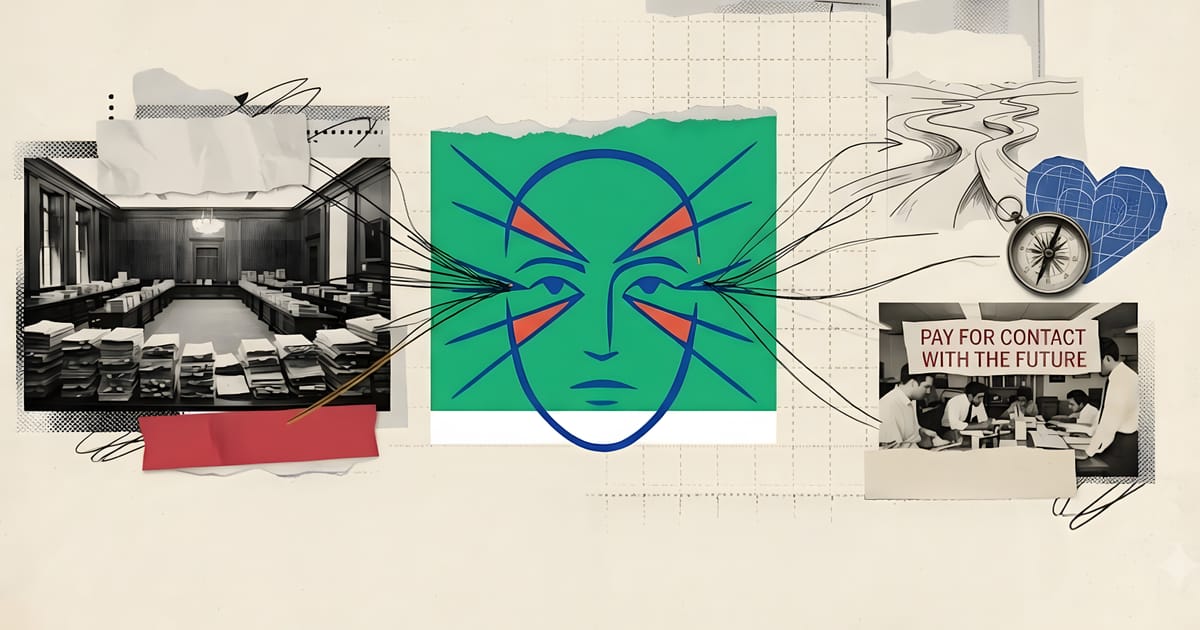
There is a way to fund the Visionary that costs almost nothing, and it is the inverse of the usual pattern: instead of paying for ideas - which the Visionary produces freely and which are mostly premature - pay for contact with the future. Budget the conference in the adjacent industry, the prototype with no business case, the afternoon a month spent with people who are not yet customers. The keynote costs the company nothing and starves the archetype completely. The pathway budget is small, and it is the only line item that says the future is staffed. Visionaries do not need belief. They need rails.
And a caution for the Visionaries themselves, because the archetype's shadow is the mirror of its gift: pathways without patience curdle into resentment - "they can't see it" - and resentment is just hope that started invoicing. The visionaries who last treat being early as a cost line, not an injustice. Both readings fit the same data. Only one of them keeps building.
Takeaway: The Visionary doesn't feel hopeful - they operate hopefully: goals, pathways, agency, on futures that don't exist yet. Fund the keynote and starve the budget, and someone else's Visionary builds your future instead.