The Charmer and the Fear Beneath the Gift
Every family and office has one: the person who says the thing exactly the way the room wanted it said. The Charmer's room-reading gift is real competence - and behind it, in a striking number of cases, sits a fear of rejection doing the navigating.
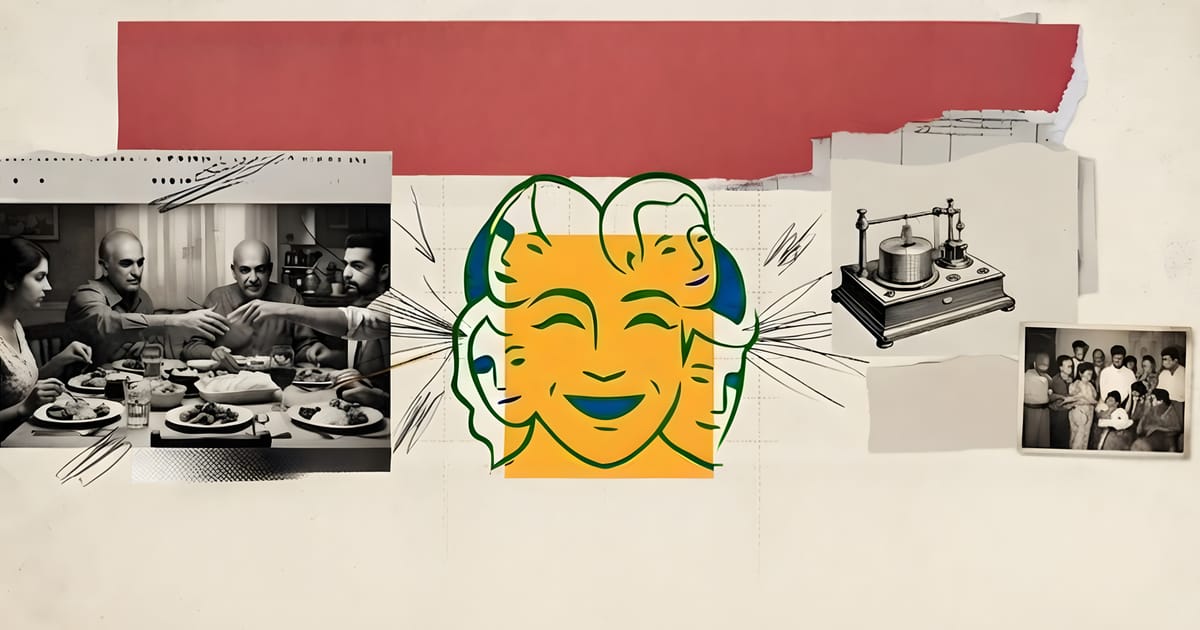
Every family has one, and every office. The person who says the thing in exactly the way the room wanted it said. Who absorbs the tension before it becomes a scene. Who knew the awkward silence needed filling and filled it, warmly, before anyone had to feel it. The Charmer is the most misunderstood archetype in the framework's sixteen, and the misunderstanding runs in both directions: the world sees a talent, and calls it social skill. The framework's notes see the same talent and, reading deeper, find the fear that navigates it.
Start with the machinery, because it is genuinely remarkable. The Charmer is hyper-vigilant - reading the room at a resolution most people reserve for chess. They register the shift in the manager's tone, the joke that landed slightly wrong, the colleague who has gone quiet for eleven minutes. And they act on the data instantly, adjusting register, redirecting the conversation, absorbing the tension into themselves the way a lightning rod handles a building's problem. This is real competence, and it is rarer than we admit: most people need the conflict to happen before they notice it was coming. The Charmer's gift is that for them, the conflict is always already pre-empted.
Now the framework's harder observation. Behind the moving-people talent, in a striking number of cases, sits a fear of rejection doing the navigating. The notes describe the profile: the "good" child, the one who learned early that the family's weather could be managed - and that management was love. Research on rejection sensitivity, pioneered by Geraldine Downey and Scott Feldman, describes exactly this mechanism: some people develop an anxious expectation of rejection that drives hypervigilant monitoring and accommodation of others, long before any actual rejection occurs. The Charmer's warmth, in this reading, is not fake - it is real, and it is also a defence. The question "so who are they, really?" is not rhetorical. It is the archetype's own unasked question.
Because here is the trap the talent builds. A person whose social instrument is calibrated to what others want to hear slowly loses access to the data of what they themselves want. Preferences atrophy from disuse. The Charmer at forty can read any room and cannot always say what they'd want if the room weren't there. The adaptation that made them beloved has quietly become a residence: they live in other people's weather.
The way out is not less charm - the gift is real, and the world would be colder without it. It is the experiment the archetype fears most: saying the thing in a way the room doesn't want to hear, once, on purpose, and discovering that the sky holds. The Charmer who survives that experiment learns the distinction their whole life has been missing - between being loved and being liked, and between the fear of rejection and the fact of it.
One more distinction completes the portrait, and it is the difference between the Charmer and the rest of the room. Most people manage a conversation to get something - agreement, approval, an outcome. The Charmer manages a conversation to manage the weather - the tension is the target, not the topic. That is why the gift shows up most strongly in rooms that are not about them: the dinner party, the negotiation, the family holiday after the bad news. If you love a Charmer, the most useful sentence you can offer is a rare one: "you don't have to handle this one." Most will not believe you the first ten times. Say it anyway. That sentence is the exit.
Takeaway: The Charmer's room-reading gift is real, and so is the fear of rejection that often drives it. The talent becomes a residence when the person can no longer say what they want - and the way out is one deliberately unwelcome sentence.