Sam Altman Declines the IPO and Calls It Safety
Sam Altman says OpenAI will not go public in 2026 because the company cannot yet make confident safety claims. Who does a refusal of public accountability actually protect?
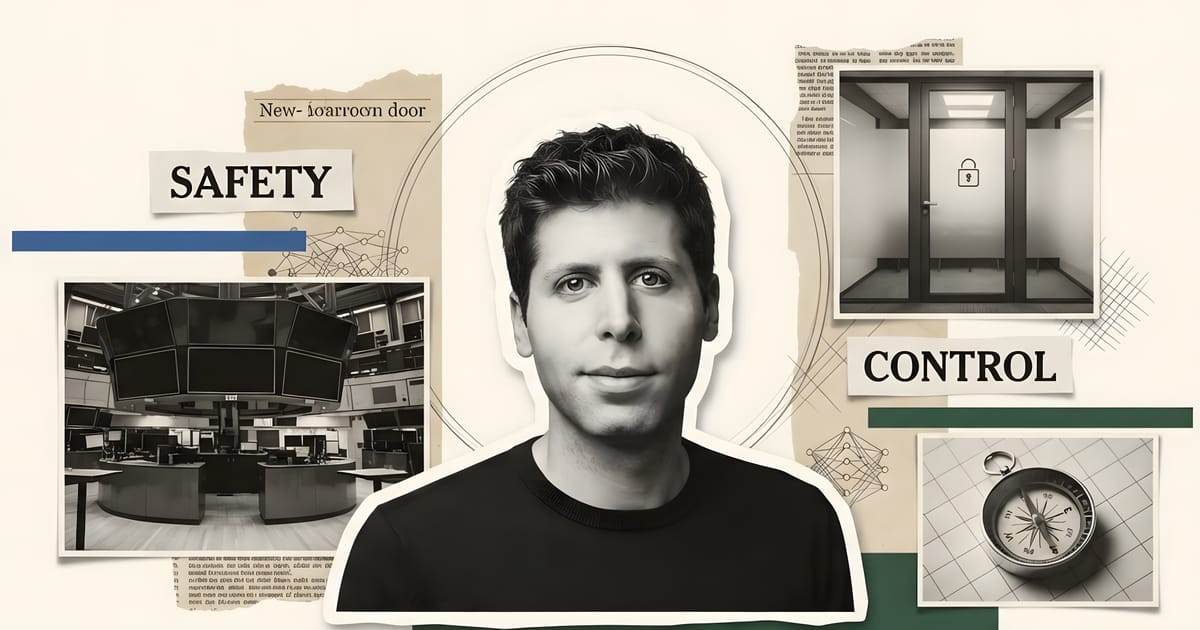
In September, in a Fortune interview, Sam Altman announced that OpenAI will not go public in 2026. The reason he gave: safety. An IPO now would be "an ill-advised moment" for a company that cannot yet make "confident safety claims" about its increasingly capable models (Fortune via GalvNews; Tech Brew).
Take the statement at face value for a moment, because it is genuinely unusual. A company reportedly valued in the hundreds of billions, with employees holding paper fortunes that an IPO would liquidate, declining the largest liquidity event in technology history in the name of safety discipline. Anthropic, notably, signalled a similar slowdown at the same time (Threads commentary). If the labs are telling the truth about what their models can do, then a bit of caution about quarterly reporting - which punishes any company that slows growth to be careful - is not theater. Public markets are structurally bad at funding patience.
But the framework asks a harder question than "is this nice?" It asks what the refusal protects, and here the picture complicates. Within weeks of the IPO refusal, Altman was out describing a strategic reorientation: AI's value now lives in enterprise deployment, not model training (Elegant Software Solutions), and OpenAI published a document titled "Our Principles," written by Altman (TechRadar). Read together, the sequence describes a company consolidating narrative control. Staying private means no shareholder filings, no independent board discipline, no quarterly transcript in which someone must reconcile the safety language with the shipping calendar. The refusal of public accountability is framed as the embrace of a higher standard - one that only the company itself is qualified to assess.
The archetype in action here is the visionary - the one who lives in what could be.
The framework is specific about this archetype's gift and its blind spot. The gift: seeing emerging patterns early and mobilising others toward them. The blind spot: preoccupation with the possible at the expense of the present - a reality that is always negotiable against the story of what it will become.
"We cannot make confident safety claims yet" is a statement about the present that quietly re-anchors trust in the future, when the claims will, presumably, become confident. The visionary's currency is the future; the visionary's risk is that the future never has to come due.
On the framework's axes, the surface language is fascinating. Safety, humility, patience - these are feminine-drive values: receptivity, care for what happens, limits. But the underlying behaviour - dominance of a category, the single best model, control of the environment - is the classic masculine drive. The framing is receptive; the posture is conquering. That combination is not hypocrisy; it is what happens when an organisation built for mastery learns to speak the language of care. The framework's warning is that the language can become a substitute for the substance it names.
And the horizontal axis raises the question nobody in the coverage is asking: whose interests does the refusal serve? Not employees needing liquidity. Not the public, which gains transparency from filings. The shareholders who gain are precisely those who already hold access - private capital in the loop, free from the disclosure that a listing would force. A refusal that concentrates information and reward inside the walls, while advertising its virtue outside them, is not a values decision. It is a structure decision wearing values as its press release.
None of this proves bad faith. It proves something more useful: that "safety" is functioning as the reason that cannot be questioned, and the framework's whole discipline is to question exactly that. The honest version of Altman's position is available and stronger: "We will go public when we choose, on terms we choose, because we can." It would lose the halo. It would keep the compass.